Episode 7
Medically Reviewed by Ms. Samantha Sadighi
How much sleep does my infant need?
Baby
|
Sleep
Baby Sleep
Episode Completed 0/11
1

Episode 1
What sleep equipment does my baby need?
What sleep equipment does my baby need?
2 mins
2

Episode 2
Should I sleep with my infant in the same bed?
Should I sleep with my infant in the same bed?
4 mins
3
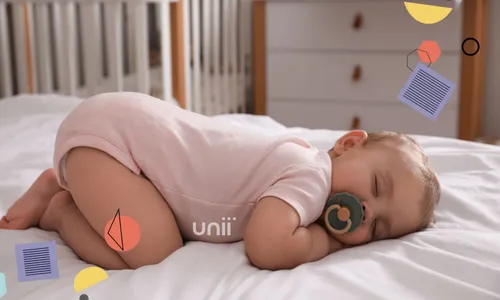
Episode 3
When can my baby sleep on their stomach?
When can my baby sleep on their stomach?
5 mins
4

Episode 4
Can my baby sleep with a weighted blanket or stuffed animal?
Can my baby sleep with a weighted blanket or stuffed animal?
2 mins
5

Episode 5
When can my baby use a pillow?
When can my baby use a pillow?
2 mins
6

Episode 6
When can my baby sleep with a blanket?
When can my baby sleep with a blanket?
4 mins


Episode 7
How much sleep does my infant need?
How much sleep does my infant need?
 4 mins
 8

Episode 8
How do I establish good sleeping conditions for my baby?
How do I establish good sleeping conditions for my baby?
4 mins
9

Episode 9
Do babies dream?
Do babies dream?
3 mins
10

Episode 10
What is sleep regression?
What is sleep regression?
4 mins
11

Episode 11
Should my house be silent for my baby?
Should my house be silent for my baby?
5 mins
On Unii’s Baby Sleep Journey, we look at how much rest your baby needs in its first year.
Show More
Related Questions
Here are some things you can do to help prevent separation anxiety at night:
1) Establish a consistent bedtime routine: Having a consistent bedtime routine, such as a bath, story, and lullaby, can help your baby relax and feel secure.
2) Create a comfortable and safe sleep environment: Make sure the room is dark, quiet, and at a comfortable temperature, and that the crib is free of anything that could pose a safety hazard.
3) Spend time with your baby during the day: Play with your baby, read to them, and talk to them throughout the day to strengthen the bond between you.
4) Gradual separation: When possible, try to gradually increase the amount of time you are away from your baby so they can get used to being without you.
5) Avoid sudden changes: Try to maintain consistency in your baby's routine as much as possible.
6) Respond promptly to your baby's needs: If your baby cries, attend to them promptly to show them that you are there to meet their needs.
7) Show them that you are coming back: If you need to leave your baby for a short period of time, make sure they understand that you will be back.
8) Give them something to comfort them: It could be a special blanket or stuffed animal that you give your baby that they can associate with your scent or touch.
It's important to note that separation anxiety is a normal stage of development for babies and it is generally a sign that your baby feels secure with you, and that they are developing healthy attachment.