Episode 3
Medically Reviewed by Ms. Samantha Sadighi
When can my baby sleep on their stomach?
Baby
|
Sleep
Baby Sleep
Episode Completed 0/11
1

Episode 1
What sleep equipment does my baby need?
What sleep equipment does my baby need?
2 mins
2

Episode 2
Should I sleep with my infant in the same bed?
Should I sleep with my infant in the same bed?
4 mins

Episode 3
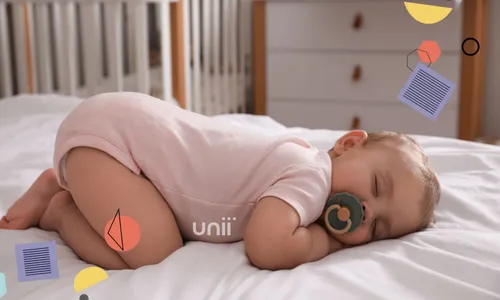
When can my baby sleep on their stomach?
When can my baby sleep on their stomach?
 5 mins
 4

Episode 4
Can my baby sleep with a weighted blanket or stuffed animal?
Can my baby sleep with a weighted blanket or stuffed animal?
2 mins
5

Episode 5
When can my baby use a pillow?
When can my baby use a pillow?
2 mins
6

Episode 6
When can my baby sleep with a blanket?
When can my baby sleep with a blanket?
4 mins
7

Episode 7
How much sleep does my infant need?
How much sleep does my infant need?
4 mins
8

Episode 8
How do I establish good sleeping conditions for my baby?
How do I establish good sleeping conditions for my baby?
4 mins
9

Episode 9
Do babies dream?
Do babies dream?
3 mins
10

Episode 10
What is sleep regression?
What is sleep regression?
4 mins
11

Episode 11
Should my house be silent for my baby?
Should my house be silent for my baby?
5 mins
On Unii’s Baby Sleep Journey, we share when your child can sleep on their stomach.
Show More
Related Questions
Here are a few ways to encourage your baby to roll over and develop their motor skills:
1) Tummy time: Place your baby on their stomach while they are awake and supervised, this will help them strengthen their neck, shoulder, and arm muscles, which are important for rolling over.
2) Encourage reaching and grasping: Give your baby toys to reach and grasp, this will help them develop their arm and hand strength.
3) Be interactive: Play with your baby using interactive toys and games, such as peek-a-boo, which will encourage them to move and reach.
4) Create interest: Place toys or other objects just out of reach to encourage your baby to move to get to them.
5) Be patient: Remember that all babies develop at their own pace, so don't expect your baby to roll over right away. Encourage and support your baby but don't force them to do anything.
6) Consult a pediatrician: If you have any concerns about your baby's development, it's always best to consult a pediatrician. They can rule out any underlying medical conditions that may be impacting your baby's ability to roll over.
It's important to remember that while you can encourage your baby to roll over and develop their motor skills, it is ultimately up to the baby to develop these abilities at their own pace. And most importantly, it's essential to always place babies on their back to sleep, even if they have begun to roll over, and to keep the crib free of any loose items or toys to reduce the risk of suffocation.